Pebble Robotics · 2026 – present
Pebble
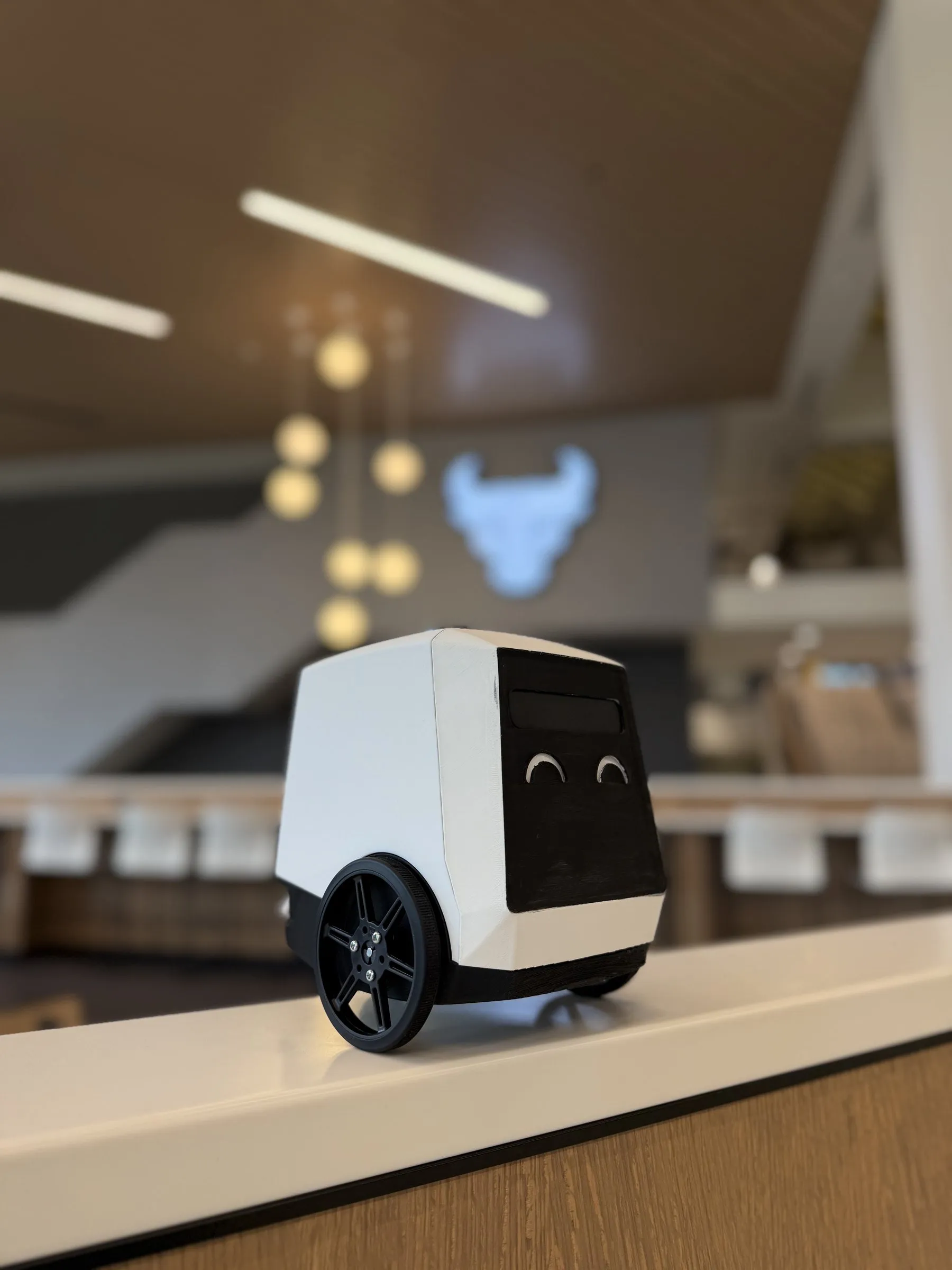
An autonomous home robot, built from scratch
- 4 months
- Solo build of the first complete robot
- 5 units
- In build for a pilot study
- Team of 5
- Formed for mapping, voice and cloud
- Role
- Co-founder
- Organization
- Pebble Robotics
- Period
- 2026 – present
- Location
- Buffalo, NY
- Website
- pebble-robotics.com ↗
- Tools and methods
- SolidWorks
- 3D printing
- ESP32
- Raspberry Pi
- Custom PCB
- LiDAR
- mmWave radar
- Python
A home robot that maps the space with LiDAR and senses what happens around it through radar and ranging instead of cameras. I built the first complete robot alone in four months, then formed the team that builds its software.
What Pebble is
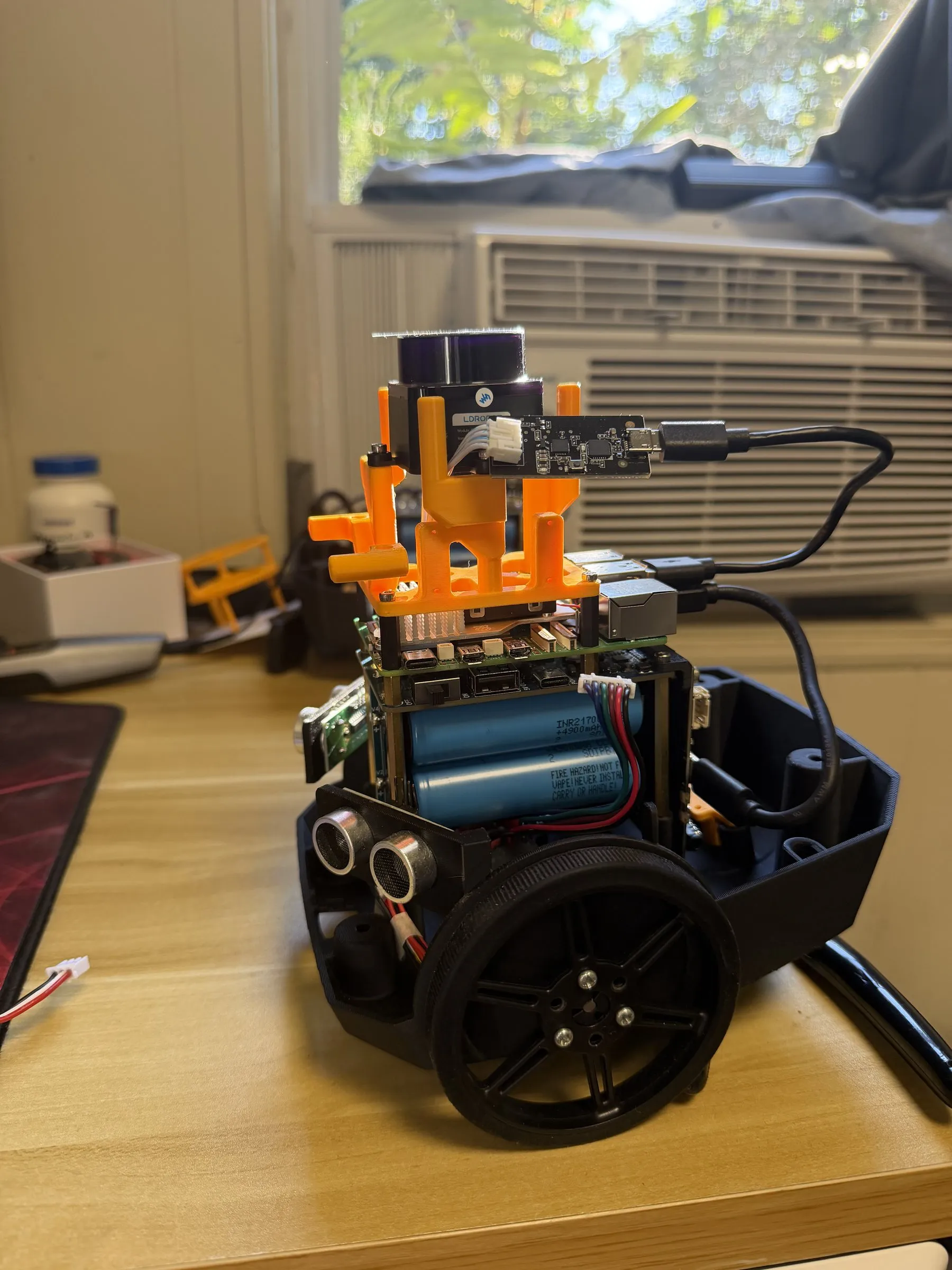
Pebble is a small autonomous robot that lives in a home. It maps the space with LiDAR, drives itself and senses what is happening around it without cameras or wearables. It uses mmWave radar, time-of-flight and ultrasonic ranging, plus a “Hey Pebble” voice interface. For people who are deaf or hard of hearing, it signals with light and vibration.
What I built
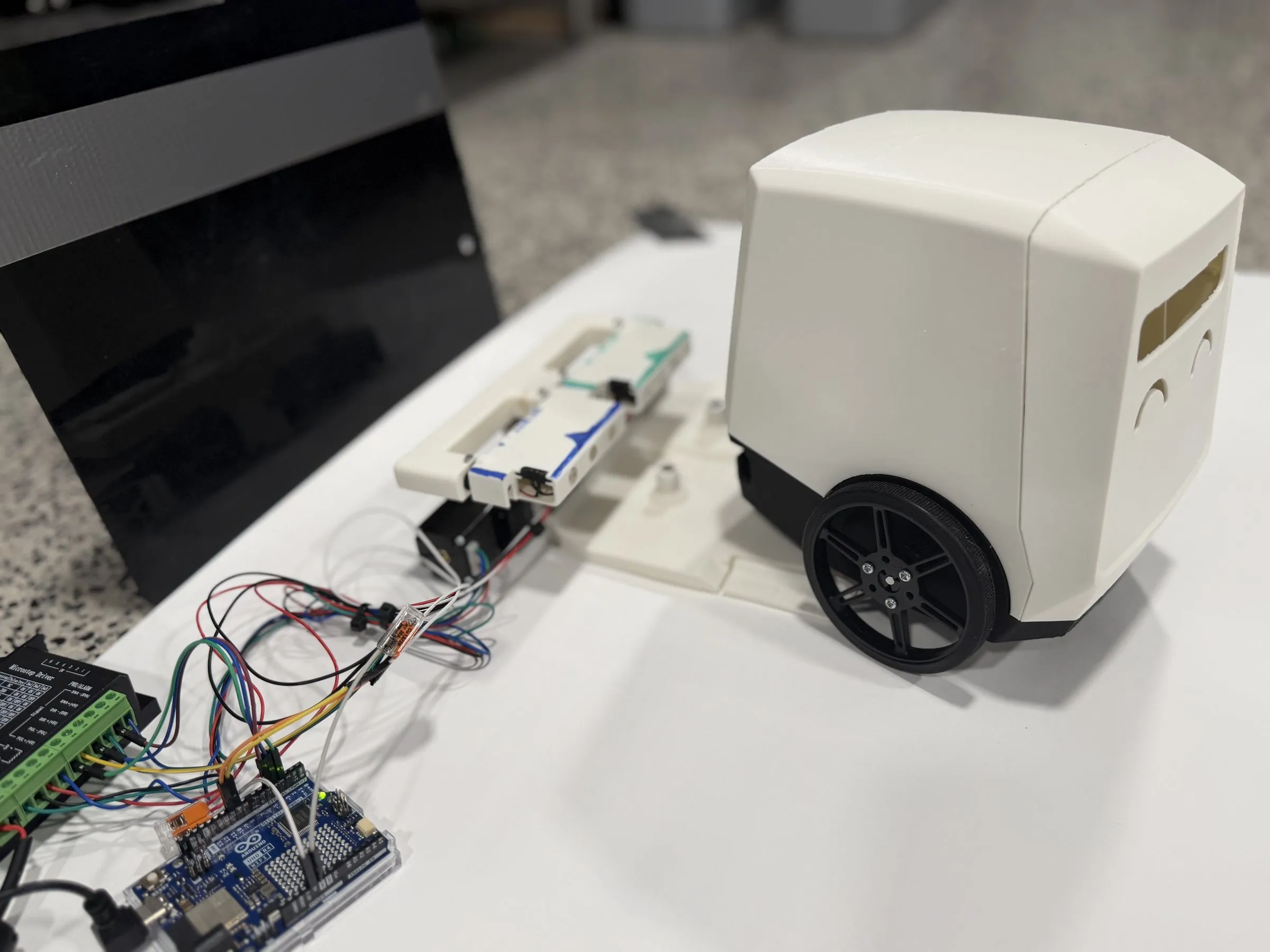
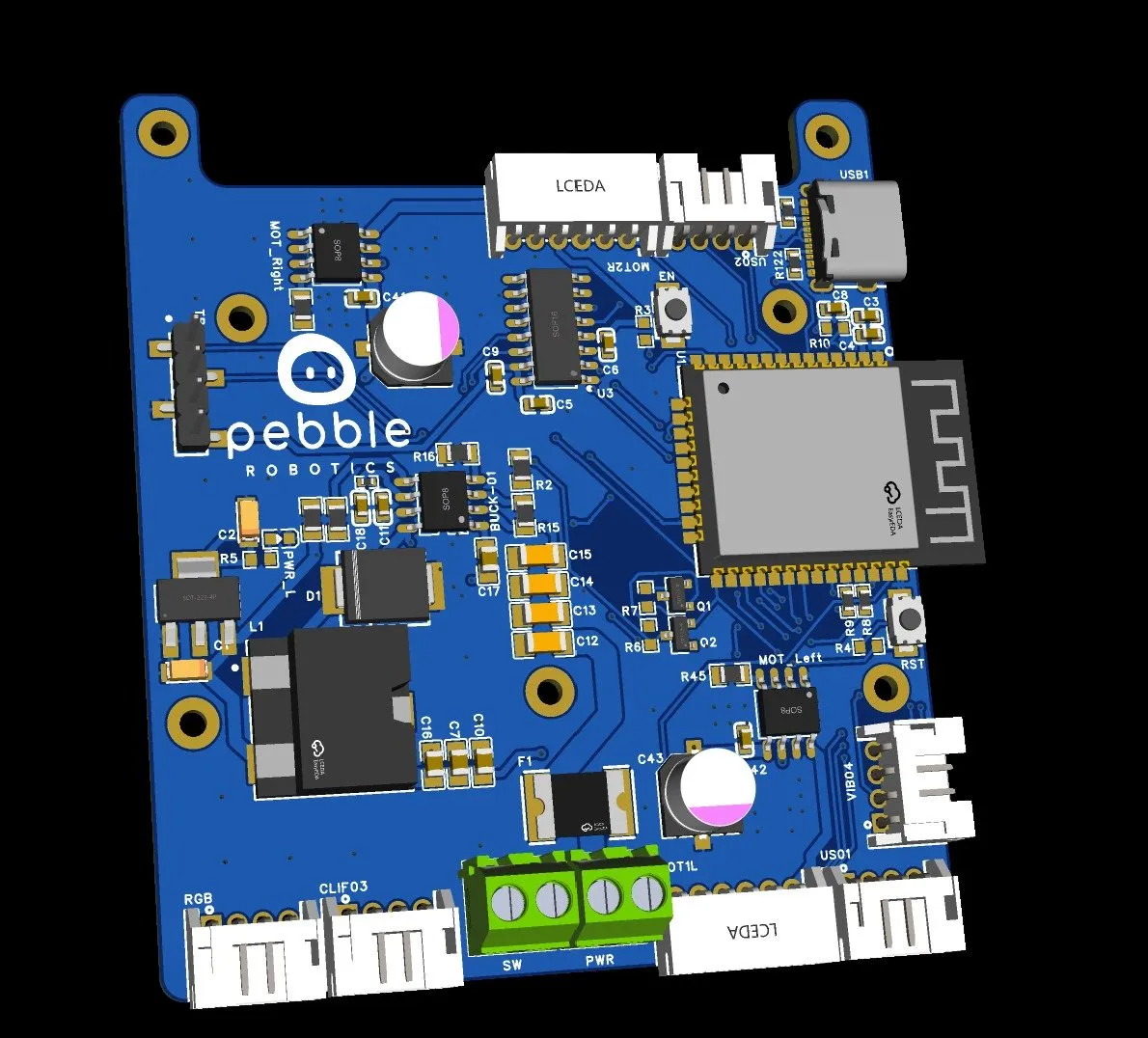
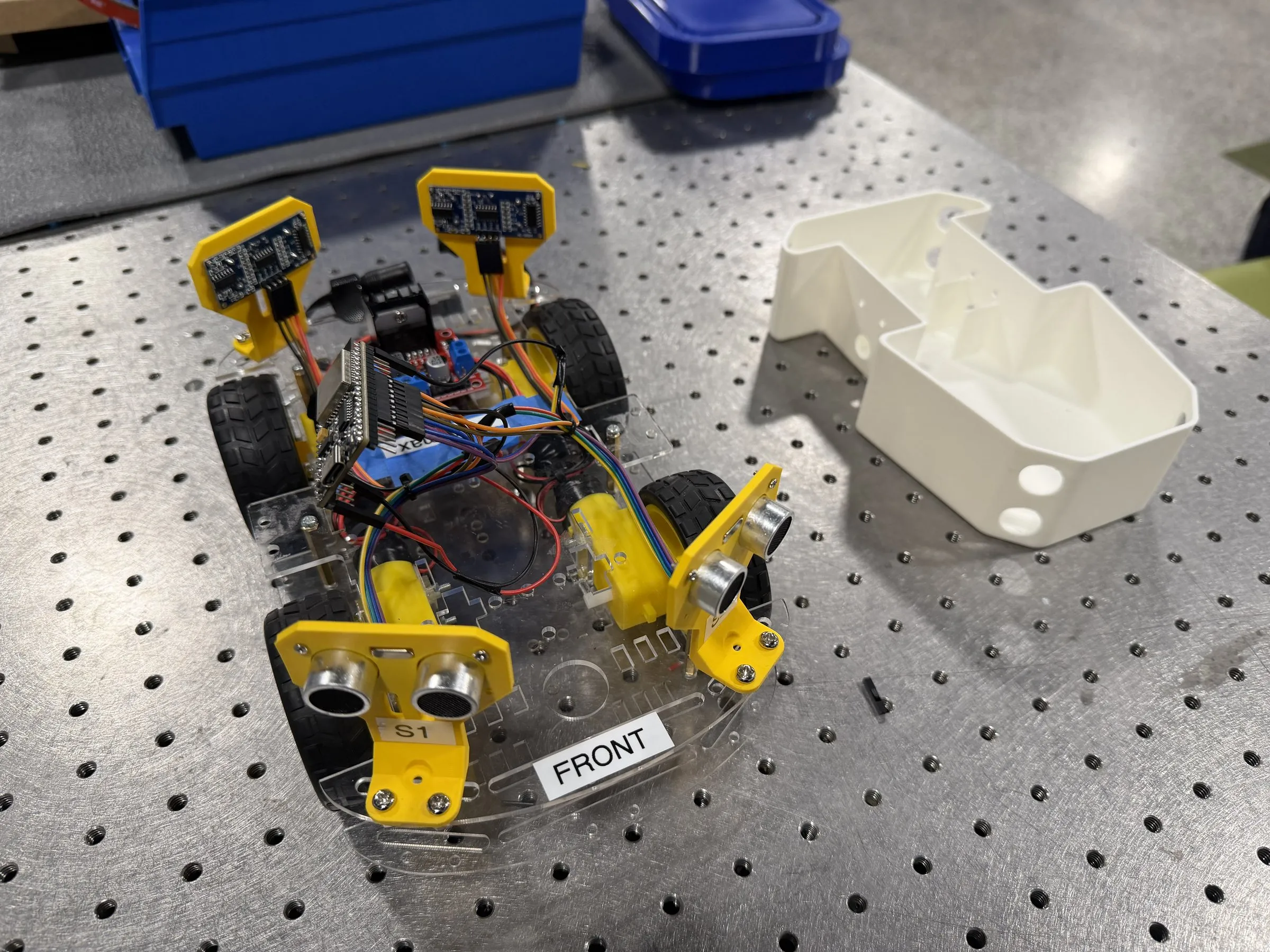
I built the first complete robot on my own in four months: the 3D-printed chassis and drivetrain, the motor-control electronics, a custom PCB and the sensor suite. Then I brought together a five-person team for mapping, voice, cloud and sensor data. I still own the hardware and every robot build.
- Drivetrain: two GM25-370CA DC gear motors with Hall-effect quadrature encoders, controlled by an ESP32.
- Power: a custom PCB with a dedicated motor supply rail and a separately regulated 3.3 V logic rail.
- Sensing: a VL53L0X time-of-flight sensor and two ultrasonic sensors for near-field ranging, a microphone and IMU, and a Raspberry Pi with LiDAR for mapping.
Key decisions
- One motor driver per wheel. On the bench, a single shared DRV8871 current-limited both motors under load. Giving each motor its own driver fixed it.
Where it is now
Five units are in build for a pilot study.